


PRP facial in Tallinn: what it does, how many sessions and does it hurt

Prices as of 25.10.2026
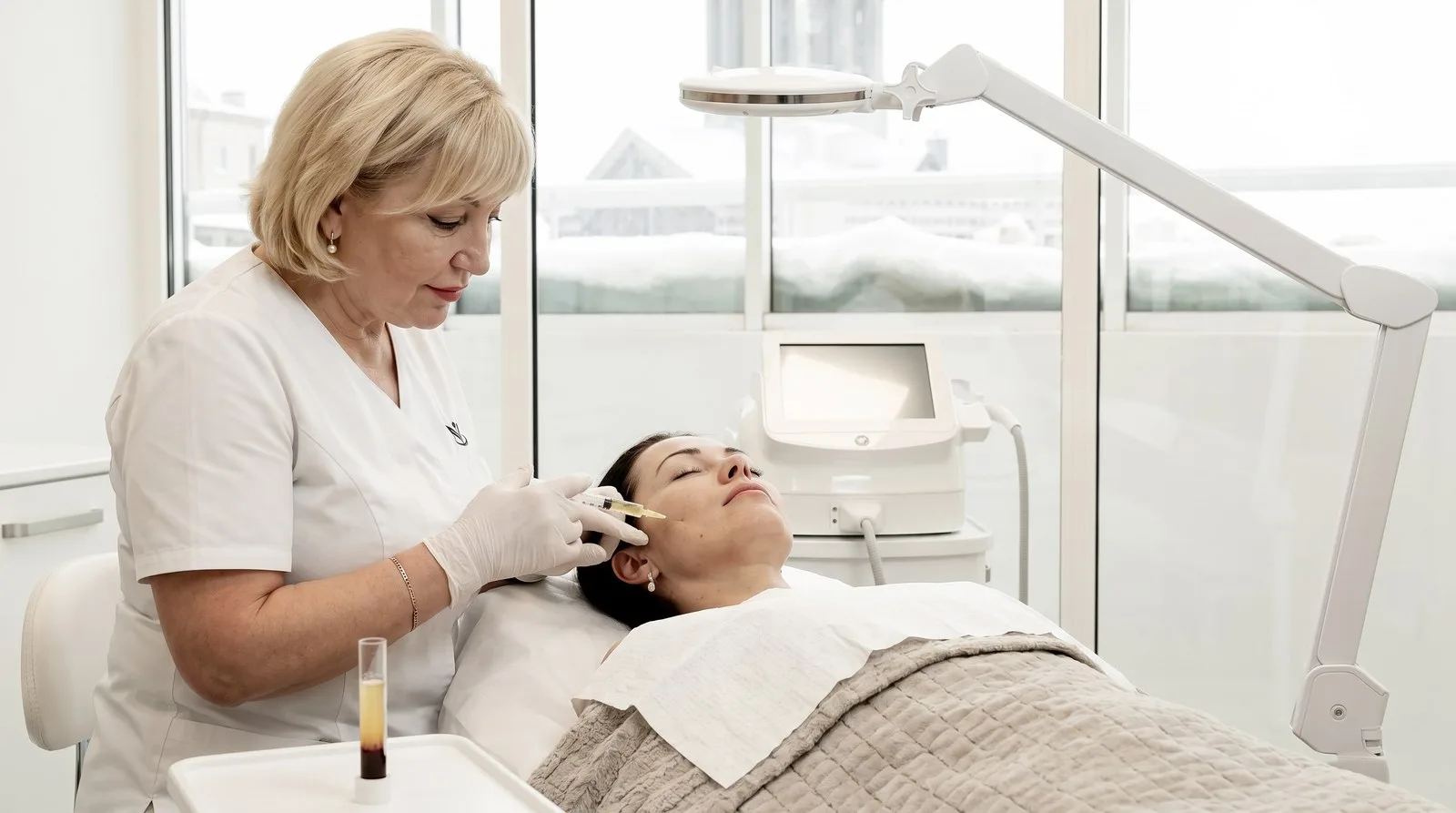
How a PRP facial works: from blood tube to injection
The visit takes 45–60 minutes.
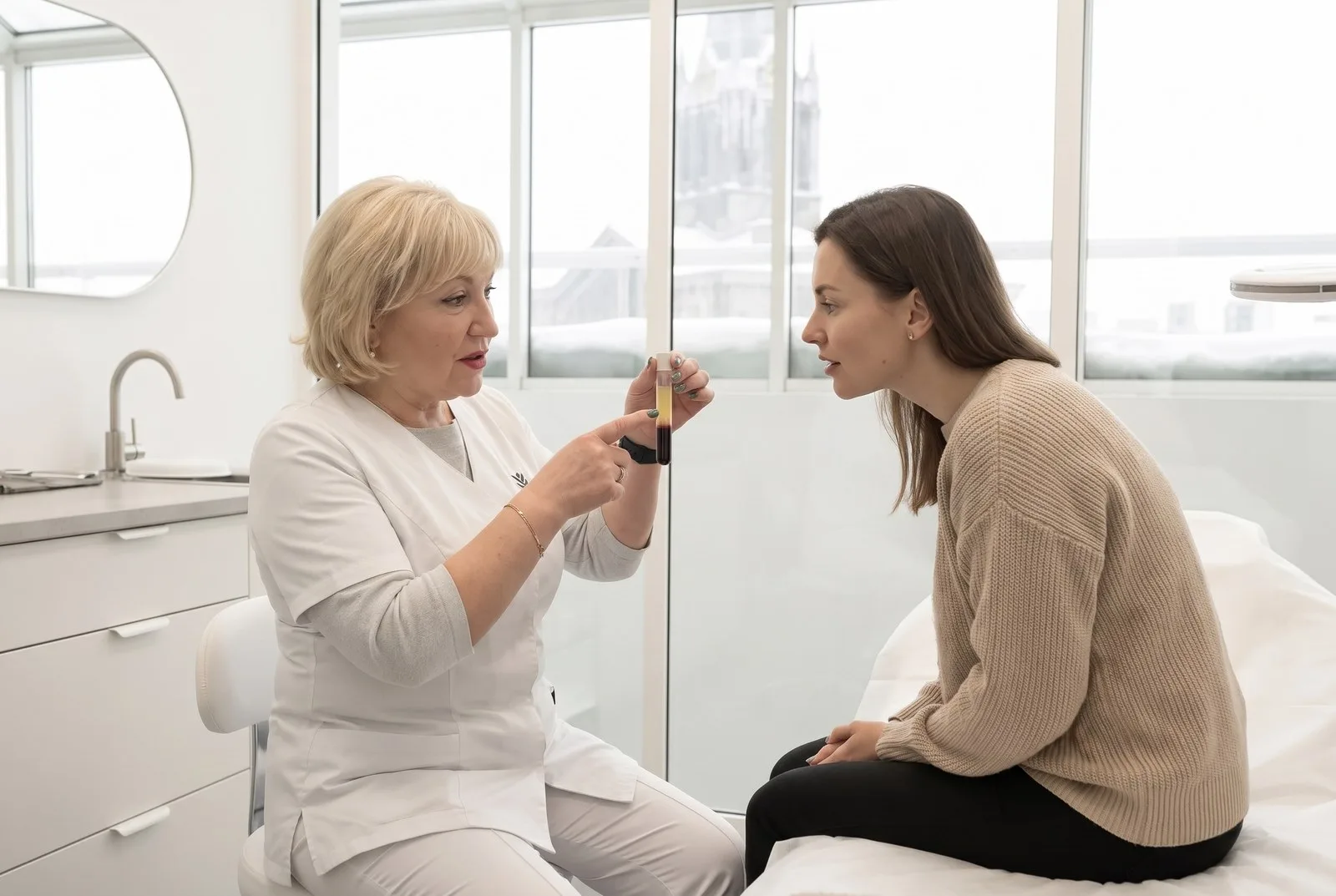
Consultation
The specialist asks about your health, medicines and blood disorders and checks whether PRP suits your skin.
Blood draw
A little blood is taken from a vein, as for a blood test. Drink plenty of water the day before.
Centrifuge
A centrifuge separates the platelet-rich plasma from the rest of the blood.
Injections
A fine needle places the plasma in the face, neck or décolleté. Numbing cream is optional.
What PRP can and cannot do: the honest evidence
Studies are small and methods vary, so results cannot be promised.
Skin texture
Strongest evidence: smoother, more even skin. The change is usually modest.
Glow and fine lines
Skin looks more rested; fine lines soften slightly, also around the eyes.
Volume and deep lines
PRP does not restore volume or fill deep folds.
Sagging
Not a lift: PRP does not raise loose skin or jowls.
How long it lasts
At Melior usually 4–6 months after a course; studies have not established this.
PRP or skin boosters: which is better?
Both target skin quality, and they can be combined.
| PRP facial | Biorevitalisation | |
|---|---|---|
| What is injected | your own platelet-rich plasma | hyaluronic acid |
| How it works | growth factors support renewal | binds water, hydrates |
| Often chosen for | dull, tired skin, fine lines | dry, dehydrated skin |
| Course | 2–3, every 3–4 weeks | 2–3, every 2–4 weeks |
| Results | in 1–2 weeks, gradually | in a few days to a week |
| Lasts | 4–6 months | 3–6 months |
| Blood draw | yes, from a vein | no |
PRP facial aftercare: redness, bruising and day-by-day care
Tap a point on the timeline.
Treatment day
Redness, mild swelling and needle marks. No make-up for 24 hours; the area is not touched or rubbed.
Days 1–3
Redness and swelling usually settle; a bruise lasts longer. No workouts, sauna, alcohol or hot baths for 48 hours.
First week
No tanning or sunbeds; SPF 50 every day. Moisturise with the cream your specialist recommends.
1–2 weeks
Skin usually looks fresher and more hydrated. The effect builds gradually, with no sudden change.
3–4 weeks
The next session of the course. Usually 2–3 in total, then a maintenance session about twice a year.
Who a PRP facial suits and who should avoid it
Usually suitable for…
- dull, tired or dehydrated skin
- fine lines
- a neck, décolleté or hands that look older than the face
- a preference for a treatment based on your own blood
Not done with…
- pregnancy or breastfeeding
- blood or clotting disorders, anticoagulants
- fever, a cold or acute infection
- cold sores, inflamed acne or broken skin in the area
- autoimmune disease
- active cancer
- another invasive treatment in the area within 2 weeks
Downsides and side effects
Downsides: you need a course, and the effect is temporary and modest.
Common
- redness, swelling, needle marks – 1–3 days
- stinging during injections
- bruising, often around the eyes
Rare
- infection at a needle site: pain, heat, pus
- allergy
Tell the clinic
Very rare, urgent
- skin turns white or blue
- severe, worsening pain
- vision changes
Clinic at once or 112
In more detail
Plasma therapy or PlasmaLifting gel?
At Melior, injections of liquid plasma are called plasma therapy, while PlasmaLifting is a separate treatment: the plasma is heated in a controlled way until it becomes a gel and is injected under the skin as your body’s own filler. It takes about an hour, first changes show in 7–14 days and the full effect in 4–6 weeks; it is usually done once and repeated after 6–12 months.
There is even less data on plasma gel than on PRP: a few small studies with about 3 months of follow-up, and in a comparative study the improvement did not last 3 months after the course. For the eye area there is a separate PRP RICH eye treatment: 2–3 sessions 3–4 weeks apart.
What does research say about PRP?
A systematic review of 24 studies (480 patients) found that PRP injections gave a modest, at least temporary improvement in skin appearance, texture and fine lines, usually by less than 50%. The evidence is strongest for texture. How long the effect lasts is not known.
A 2024 overview of 13 systematic reviews judged the evidence insufficient for firm conclusions: most studies had no control group. Plasma is also prepared differently from study to study. That is why no result is promised: it depends on your skin, age and lifestyle.
How to prepare for a PRP facial
Drink enough water the day before. Avoid alcohol and coffee for 48 hours and fatty, heavy food for 24 hours, as they affect plasma quality. No other aesthetic treatments in the same area for 7 days before. With a fever, a cold or severe tiredness, the appointment is moved.
Ibuprofen, aspirin and other anti-inflammatory painkillers affect platelets: if you take them on your own, tell the specialist in advance. Reviews list taking them within 2 weeks before PRP as a contraindication. Medicines prescribed by your doctor are never stopped on your own; they are discussed at the consultation.
Combining PRP with other treatments
It is possible, but not on the same day: at Melior at least 2 weeks are left between PRP and fillers, laser or a peel in the same area. In a randomised trial (93 patients), PRP combined with hyaluronic acid improved the skin more than either treatment alone. Products are described on the biorevitalisation page.
If the aim is to restore volume or soften a deep line, other options are discussed: botulinum toxin or fillers.
Frequently asked questions
Does a PRP facial hurt?
It is usually tolerable: you feel light stinging and needle pricks, more around the eyes. Numbing cream can be applied beforehand. The blood draw feels like an ordinary blood test.
How much does a PRP facial cost in Tallinn?
At Melior Clinics, PRP for the face costs €200, the neck or décolleté €150, face, neck and décolleté €300, and the hands €125. PlasmaLifting gel for the face is €225 (price list 25.10.2026). A course is usually 2–3 sessions.
PRP or skin boosters: which is better?
It depends on the goal. For dry, dehydrated skin, hyaluronic acid biorevitalisation is chosen more often; for dull, tired skin, PRP. They are often combined: in a trial they worked better together than alone. The choice is made at the consultation.
How long does a PRP facial last?
According to Melior, usually 4–6 months after a course of 2–3 sessions, with a maintenance session about twice a year. Studies have not established how long the effect lasts; it depends on your skin and lifestyle.
Will I bruise after PRP?
You might, especially around the eyes. Redness and swelling usually settle in 1–3 days, a bruise takes longer. Before an important event, leave time to spare: skin looks fresher after 1–2 weeks.
Can I have PRP on blood thinners?
Usually not: blood disorders, clotting problems and anticoagulants are contraindications. Prescribed medicines are never stopped on your own; whether the treatment is possible is decided with your doctor and the specialist.
Can I go straight back to work?
Usually yes: needle marks and redness fade in 1–3 days. No make-up for 24 hours, and no workouts, sauna or alcohol for 48 hours.
PRP facial in Tallinn
Read next
- Maisel-Campbell AL, Ismail A, Reynolds KA, et al. A systematic review of the safety and effectiveness of platelet-rich plasma (PRP) for skin aging. Arch Dermatol Res. 2020;312(5):301–315 (PubMed)
- Cruciani M, Masiello F, Pati I, Pupella S, De Angelis V. Platelet rich plasma for facial rejuvenation: an overview of systematic reviews. Blood Transfus. 2024;22(5):429–439
- Phoebe LKW, Lee KWA, Chan LKW, et al. Use of platelet rich plasma for skin rejuvenation. Skin Res Technol. 2024;30(4):e13714
- White C, Brahs A, Dorton D, Witfill K. Platelet-Rich Plasma: A Comprehensive Review of Emerging Applications in Medical and Aesthetic Dermatology. J Clin Aesthet Dermatol. 2021;14(11):44–57
- Hersant B, SidAhmed-Mezi M, Aboud C, et al. Synergistic Effects of Autologous Platelet-Rich Plasma and Hyaluronic Acid Injections on Facial Skin Rejuvenation. Aesthet Surg J. 2021;41(7):NP854–NP865 (PubMed)
- Diab HM, Elhosseiny R, Bedair NI, Khorkhed AH. Efficacy and safety of plasma gel versus platelet-rich plasma in periorbital rejuvenation: a comparative split-face clinical and Antera 3D camera study. Arch Dermatol Res. 2022;314(7):661–671 (PubMed)
This article is general information and does not replace a consultation. Whether a treatment suits you is decided by a specialist at the consultation. Melior Clinics (Star Company OÜ), Liivalaia 53, Tallinn · Estonian Health Board licence L04198.
