


HIFU facial in Tallinn: who it suits, does it hurt and how long it lasts

Prices as of 24.10.2026
How long does HIFU last, and when do results show?
Tap a point on the scale.
Straight after
Skin may look pink and feel tighter — partly mild swelling. Redness settles within hours, swelling and tenderness within days. Daily life at once.
Months 1–2
Collagen is renewing. Change is slow and hard to notice.
Months 2–6
The biggest change. The result is reviewed after about 3 months. Expect tightening, not a facelift: in studies, patients often described the change as mild.
Months 12–18
The effect fades and natural ageing continues. For the face, a repeat is usually yearly — decided by how the face looks, not the calendar. Studies mostly followed patients for up to a year.
Who is HIFU for, and who is it not for?
Suitable if…
- laxity is mild to moderate
- the jawline has softened
- cheeks or chin sag slightly
- neck skin is looser
- you want no injections or downtime
Not suitable if…
- marked sagging or hanging skin — a surgeon’s field
- volume is lost — fillers or collagen stimulators
- mostly fat under the chin — double chin lipolysis
- pregnancy or breastfeeding
- inflammation, damaged skin or a metal implant there
- fillers or botulinum toxin there under 4 weeks ago
HIFU vs threads, RF or a biostimulator
Often combined: HIFU first, fillers 2–4 weeks later. On threads: COG lifting threads.
| HIFU | COG threads | RF | Biostimulator | |
|---|---|---|---|---|
| How it works | ultrasound heats points down to the SMAS | barbed threads lift tissue | current heats skin more broadly | injection triggers collagen |
| Needles | no | threads under the skin | no | injections |
| Results | gradual, peak at 2–6 months | lift at once, final at 2–3 months | gradual, often a course | gradual, 2–6 months |
| Lasts | often 12–18 months | on average 12–18 months | depends on device, course | 12–18 months, some longer |
| Downtime | usually none | swelling, bruising 5–10 days | usually none | swelling, bruising a few days |
| Mainly for | mild to moderate laxity, jawline, neck | sagging, visible lift wanted | mild laxity, skin texture | thin skin, volume loss |
HIFU side effects: normal or not?
One review: other side effects in about 2% of patients.
Common
- redness — hours
- swelling, tenderness — days
- temporary numbness or tingling
- sometimes a bruise
Rare
- nerve irritation; very rarely an uneven smile
- blisters, burns or line marks, often on the jawline
- hollow cheeks or temples in a lean face
Tell the clinic
Right away
- blisters or a wound
- pain or swelling worse after a few days
- facial movement changes
- lasting numbness, a dent in the skin
Tell the clinic at once
HIFU preparation and aftercare
Pick a stage.
Avoid
- Peels, intensive facials, tanning — 5 days before
- Alcohol and intense exercise on the day
Mention
- Chronic conditions, implants, recent injections
Avoid
- Exercise
- Sauna
Fine
- Work and daily life
- Make-up the same day, if the skin feels comfortable
Avoid
- Sun without SPF 50
- Other aesthetic treatments in the same area
Fine
- Exercise and sauna
Not yet
- Fillers in the same areaHeat may speed up the breakdown of an injected product
- Judging the resultIt is reviewed after about 3 months
Fine
- Fillers 2–4 weeks after HIFU
Planning an event?
Wedding, holiday, photo shoot — pick how long you have until the event.
In more detail
What HIFU and the SMAS are
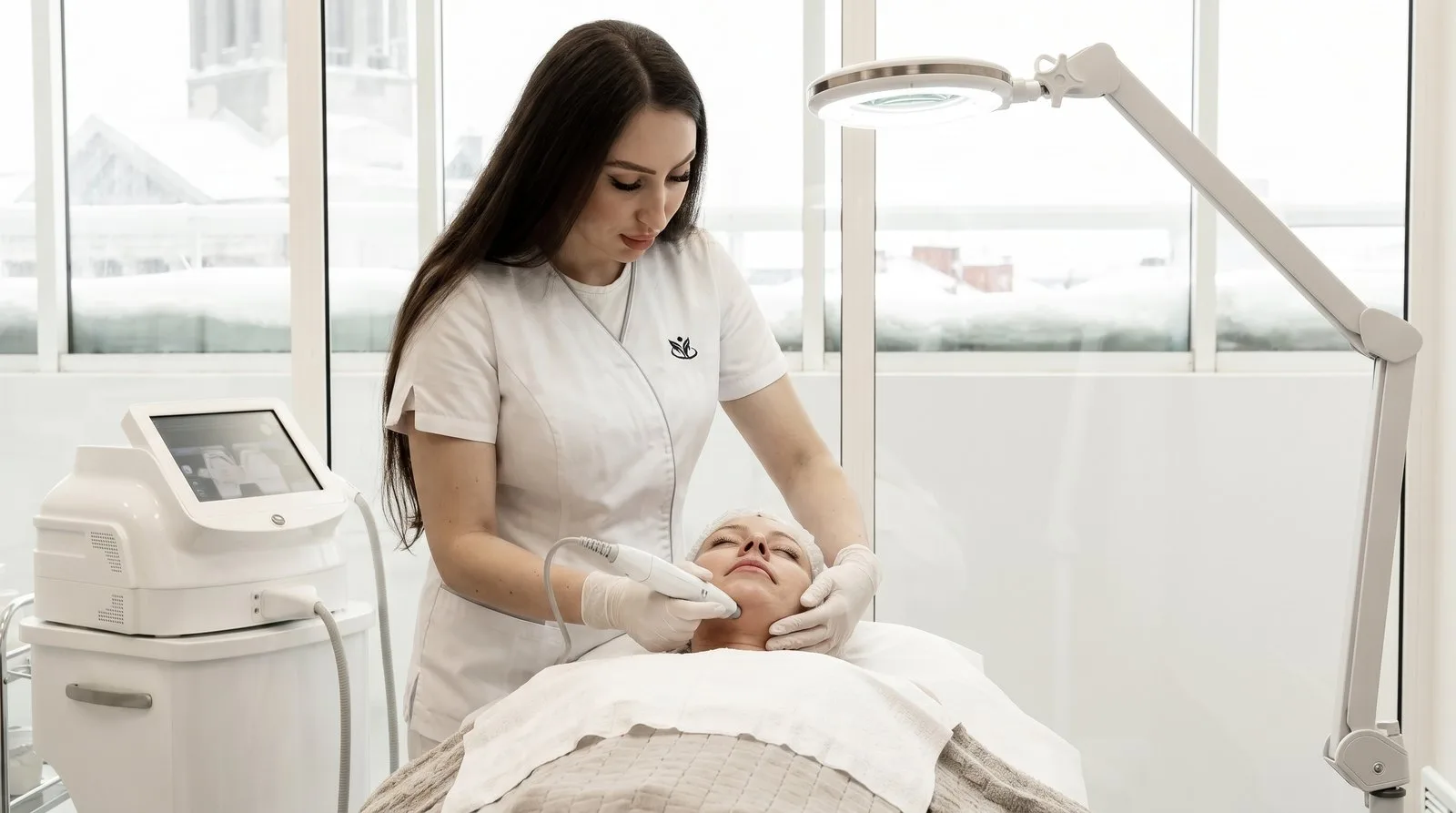
HIFU, or high-intensity focused ultrasound, concentrates energy into tiny points at a set depth. Small heated spots form there for a moment while the skin surface stays intact. The tissue responds by renewing collagen, so over weeks and months the skin may become firmer.
The SMAS is the layer between the facial muscles and the skin that holds the soft tissues in place. A surgeon works on it in a facelift; HIFU reaches it without an incision. The HIPRO-V device at Melior works at 1.5, 3.0 and 4.5 mm on the face. HIFU does not add volume or remove excess skin.
What happens during treatment
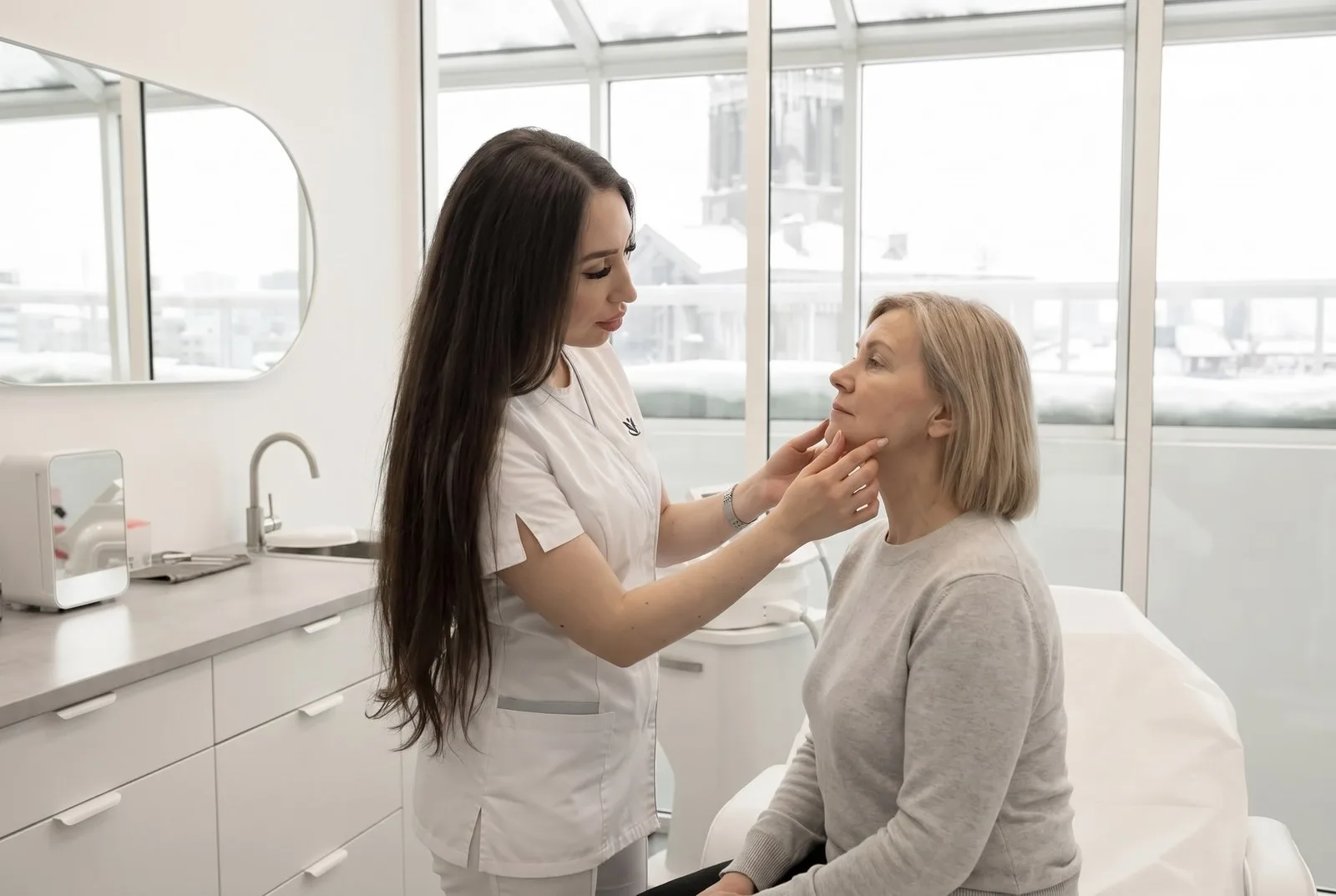
30–90 minutes depending on the area. The specialist assesses laxity, skin thickness and fat, and asks about your health, medication, implants and recent injections. The skin is cleansed, gel is applied and the handpiece is moved in rows, at different depths. Energy is lowered in sensitive areas; anaesthesia is not usually needed.
Who should not have HIFU
Not during pregnancy or breastfeeding, with acute inflammation or damaged skin in the area, or with a metal implant there (for example in the jaw). Serious heart or neurological conditions need your own doctor’s opinion. In a very lean face, the risk of fat loss is weighed. The specialist decides at the consultation.
How often can you have HIFU?
For the face, usually once a year: collagen renews over months and the result is reviewed after about 3 months. Body areas — abdomen, flanks, thighs, arms — are often treated as a course of 2–3 sessions.
What the studies show
In pooled analyses the improvement was mild to moderate, and smaller with more laxity and higher body weight. Serious complications are rarely described, though one review notes they may be underreported.
In the US FDA database of device reports, the most frequent reports for one HIFU device concerned fat loss, nerve damage and scarring. These are unverified reports, not studies.
Frequently asked questions
Is HIFU painful?
Uncomfortable but tolerable for most people: brief pulses of heat and prickling, stronger near bone such as the jawline and forehead. In a pooled analysis of studies, patients rated pain at about 4 out of 10.
How long does HIFU last?
According to Melior Clinics, often 12–18 months, with the biggest change at 2–6 months. Studies mostly followed patients for up to a year. It depends on age, skin, laxity and lifestyle.
What are the side effects of HIFU?
Usually redness, mild swelling, tenderness and temporary numbness that settle within hours to days. Rare risks include nerve irritation, blisters or burn marks, and fat loss in a lean face.
How much does HIFU cost in Tallinn?
At Melior Clinics, from €150 for the double chin; neck €200, full face €400, face, neck and décolleté €550 (price list of 24.10.2026).
HIFU vs Ultherapy and Ultraformer?
HIFU is the technology; Ultherapy and Ultraformer are brand names of devices from different manufacturers. The principle is the same: focused ultrasound at a set depth. Melior Clinics uses the HIPRO-V device.
Can HIFU replace fillers or a facelift?
No. HIFU tightens mild to moderate laxity; fillers add volume, and a facelift removes excess skin and repositions tissue. HIFU can be combined with fillers: HIFU first, fillers 2–4 weeks later.
HIFU SMAS lifting in Tallinn
Read next
- Contini M. et al. A Systematic Review of the Efficacy of Microfocused Ultrasound for Facial Skin Tightening. Int J Environ Res Public Health, 2023 (PubMed)
- Ayatollahi A. et al. Systematic review and meta-analysis of safety and efficacy of high-intensity focused ultrasound (HIFU) for face and neck rejuvenation. Lasers Med Sci, 2020 (PubMed)
- Friedmann DP et al. Complications from microfocused transcutaneous ultrasound: case series and review of the literature. Lasers Surg Med, 2018 (PubMed)
- Humphrey VS et al. Microfocused Ultrasound With Visualization: A Systematic Review of Adverse Events and Risk of Subsequent Facelift Compromise. Dermatol Surg, 2025 (PubMed)
This article is general information and does not replace a consultation. Whether a treatment suits you is decided by a specialist at the consultation. Melior Clinics (Star Company OÜ), Liivalaia 53, Tallinn · Estonian Health Board licence L04198.
